Showing posts with label Mountain men. Show all posts

Captain Benjamin Bonneville

 Wyoming Fact & Fiction

February 7, 2022

Today, I will go way back in Wyoming history to talk about Captain Benjamin Bonneville. Bonneville might be best remembered because of the tales told of him by Washington Irving. Although romanced and glorified, that book published in 1837 – The Adventures of Captain Bonneville, made Bonneville famous. It is a good thing because Bonneville started with leave from the Army but overstayed his time in the west by a couple of years. After a bit of an oral reprimand, the Army reinstated Bonneville to his rank and position in the military after his three-year wandering sabbatical.

So what did Bonneville do? He found his way with one hundred and ten men and twenty-eight wagons over south-pass first traversed by the Ashley party six years earlier. This passage of so many men and wagons opened up what would soon become the Oregon Trail – the new gateway to the west coast. Bonneville traveled from Independence, Missouri, crossed the Little Blue in Nebraska, followed the Platte to the Sweetwater, and then led his men through south pass to the Green River. On the Green, he met Lucien Fontenelle of the American Fur Company and built Fort Bonneville. That fort near present-day Pinedale was completed by early August in 1832. It did not take long for heavy winter snows to cause Bonneville and his men to abandon the fort for a more mild location. The fort was so short-lasting that it was later dubbed Bonneville’s Folly or Fort Nonsense. Although nothing remains of the fort today, the site is marked and on the National Register of Historic Places.


Wyoming Trivia – two questions today

Q1 – Washington Irving might be famous in the west for writing his tales of Captain Bonneville, but he is best known for writing two of the most famous short stories in literary history. Can you name one or both?

Q2 – Before Captain Bonneville reached Green River, there had already been seven mountain man rendezvous in the area. What, located in the town of Pinedale today, celebrates those early Wyoming times?


Answers

Q1 – Rip Van Winkle (1819) & The legend of Sleepy Hollow (1820)

Q2 – The Museum of the Mountain Man


Here is the link to all of my books on Amazon
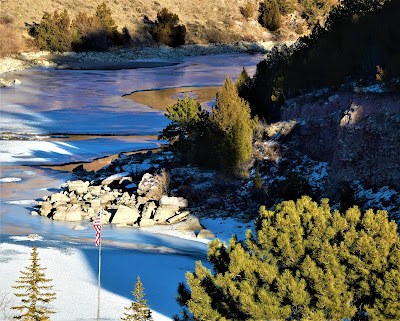


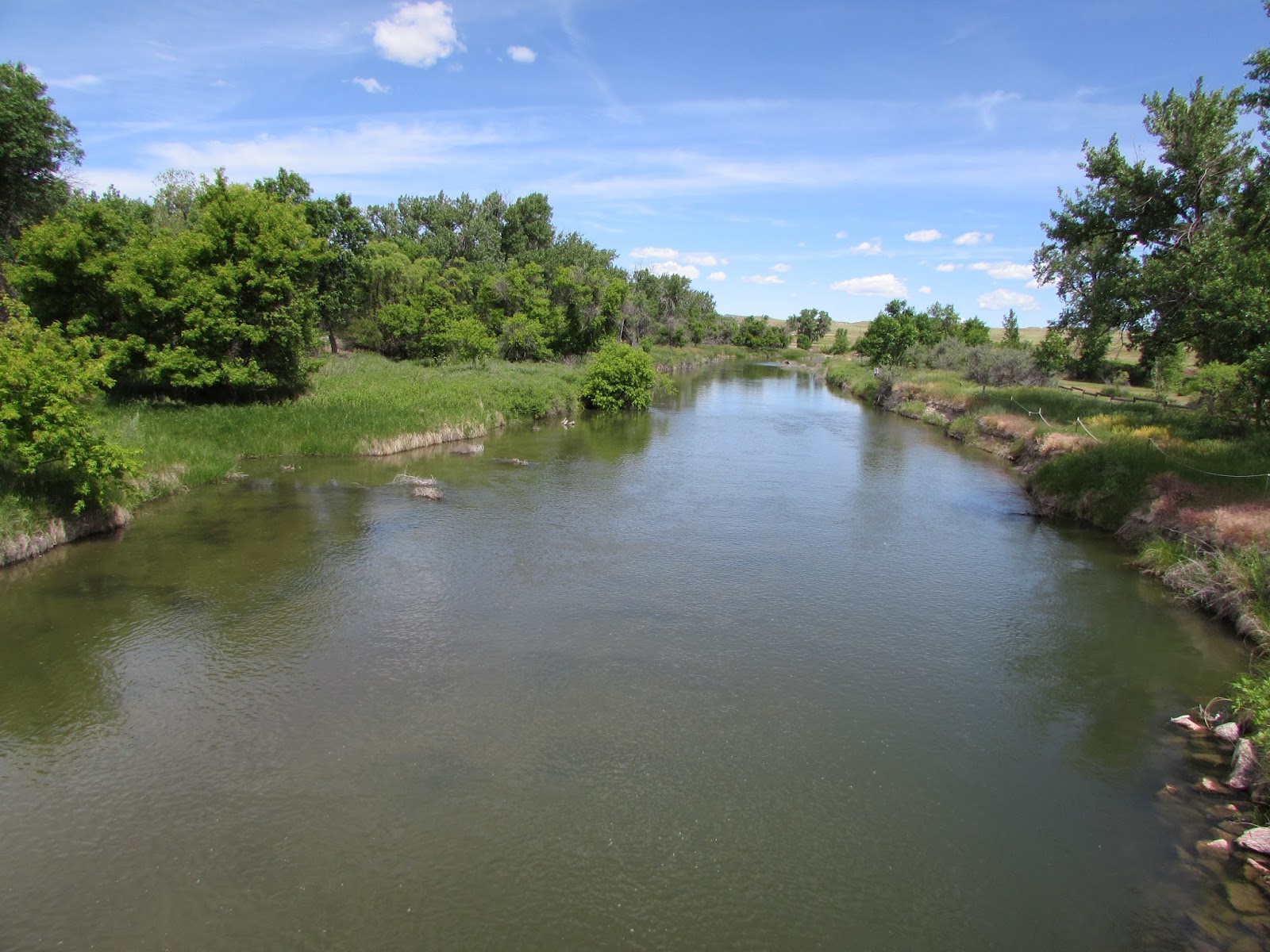
Today’s photos were taken last week in and around my little town of Guernsey and all taken while on one of my many daily walks.

See you next week!


Battle Mountain Wyoming

The Tale of Two Mountains Named Battle

Wyoming boasts, not one but two Battle Mountains. One of the  Battle Mountain’s and the more famous of the two is in the Medicine Bow Range on Wyoming’s southern border and sits near the tiny hamlet of Savery, peaking at a bit over 9,100 feet, about 3,000 feet more than the surrounding area. The second is in Sublette County south and east of Jackson and is described more often as a hill than a mountain with an elevation of 7,100 feet.


As readers might guess, each was named after a famous battle. Or in the case of the Sublette Mountain a bit of a disturbance. In reality, the battle was but a misunderstanding of hunting rights in the area. In 1895 a posse from Jackson was sent to arrest a small party of Bannocks for game law violations. Seems the area had been a long time hunting ground for the tribe, but now with Wyoming being a state for five years there were rules about hunting. Never mind that the Bannock tribe had hunted the area for generations.

The Battle Mountain in southern Carbon County boasts a much better reason for its name.  It was the setting for an 1841 battle between 35 members of the American Fur Company and what has been described as a large group of Cheyenne and Sioux. Several trappers, including Henry Fraeb (also spelled as Frapp), the group’s leader, were killed. Beloved Wyoming mountain man, Jim Baker at age 21,  became the new leader of the trapper bunch when Fraeb was killed, and barely escaped with his life. The furious battle led to the changing of Bastion Mountain’s name, to Battle Mountain.
Battle Mountain and Battle Lake - Site of the 1841 battle
                   
Note – There is also a nice Wyoming legend of Thomas Edison camping at the foot of Battle Mountain and fishing in Battle Lake when he was struck with the inspiration to create an electric light. Great story if it’s true!

School Is Back In Session

It’s that time of year again. School starting all over Wyoming. With that in mind, I thought it might be interesting to take a look back at early schools in the state.
Remember these? Black boards and Elementary School Rules


The first Wyoming school opened at Fort Laramie and was soon followed by several private schools as the population warranted. Robert Baker opened a school in South Pass with families paying one dollar each week per child. By 1870 the census listed five private and four public schools in the state. That same year the only public school buildings were in Cheyenne.

In 1871 Dr. J. H. Hayford, the auditor for the territory of Wyoming listed schools in Albany and Laramie counties as good, Carbon and Uinta had schools he listed as fair. Students furnished their own school materials and textbooks were, a haphazard, whatever could be found that was suitable for the job.

Pretty Nice Place to Live


In 1873 a compulsory education law took effect, ordering every child between ages 6-18 to attend school for three months each year. As the state grew so did the number and efficiency of the schools. Territorial Governor Hoyt said in 1878, “I have never known a community, whether in this country or in Europe, more zealously devoted to the cause of popular education than the people of this new Territory.”

In the last decade before statehood, in 1890, Wyoming’s population tripled and the school population doubled. The number of buildings now used as, or built for schools, grew from 39 to 138.

Wagon Trains, trappers, traders and hunters passed through the state for many years, but when the railroad came, people followed and with people came schools. And with schools came that great sound of kids playing on the playground and if you are inside, learning the old three Rs and a few other things.
Just Passing Through


After 42 years of teaching, I still sub in the local schools a few days each month. That leaves me many days to sit and write at home. I just published Ghost of the Fawn, my sixth book.


It is set, of course in Wyoming, and originally I targeted it as a young adult book. My first readers, who help me refine and edit, seem to think it is a great adult read as well. If you have time give it a look, not sure when it will be available but certainly should be by the end of the weekend.


A Few Wyoming Photos

Nice Buck Looking at Me
I have been on a bit of a writing break, or summer vacation the last couple of weeks. With that time off, I missed my post last week but never fear I am back, be it good or bad.
Here We Are, Spending Time in the Blackhills Last Week

When the weather is nice, I try to spend as much time as possible in the woods, forests, and mountains of Wyoming.
This One About Four Miles From Home

This week, doing some research for a project, I ran across the works of John Hector St. John. Although he never ventured farther west than New York State he had some profound things to say about what he viewed in the west or wilderness of early America. At the time and his writing it was the middle and late 1700s, well before even the first mountain men came west.
Mountain Man Camp at Fort Laramie

Crevecoeur was a Frenchmen who moved to America became a citizen/farmer and later writer. His volume of essays, Letters from an American Farmer, quickly became a best seller in Europe making him one of the first Americans to experience a best seller in Europe. His stories gave Europeans a first look at what one of their own thought of America.
Wonder if St. John Had Views Like This to Write About?


Today I thought I might share a few of my favorite photos from my time in the woods this summer. Not exactly the essays of St. John, but still nice.
Albino Mule Deer Peeking From Behind a Bush


I must tell you, that there is something in the proximity of the woods, which is very singular. It is with men as it is with the plants and animals that grow and live in the forests; they are entirely different from those that live in the plains.

J. Hector St. John Crevecoeur
Elk - I Snapped This Just At The End of Daylight


Enjoy, now it’s time for us to head out to Guernsey State Park and spend some time in the woods. 
Looking Good In Tall Grass

Didn't Some Wyoming Guy Write The Revenant?

Michael Punke might be the most famous writer who grew up in Wyoming that no one has ever heard of. That might be a bit harsh as many of us have read the book, The Revenant: A Novel of Revenge. Or if we didn’t read it many have enjoyed Leonardo DiCaprio as Hugh Glass, winning an Academy Award for his performance in, The Revenant.
Cold  Mountain Stream - The kind early trappers searched for


   Michael grew up and graduated from high school, where his dad taught Biology, in Torrington Wyoming. He spent a few summers working at nearby Fort Laramie, which may have whetted his appetite for the old west and early Wyoming. But there is more to the story, much more. Michael is not your typical, set at the computer and pound out stories, writer.
Fourth of July at Fort Laramie

Michael Punke has a day job. He is the Deputy United States Representative and US Ambassador to the World Trade Organization in Geneva, Switzerland. Not what most would expect for the writer of a world class mountain man tale. He is a lawyer getting his law degree from Cornell. Now for the part, I find to be almost as good a story as the one of Hugh Glass.


He is not allowed, by ethics rules to speak publically about the book. Nor can he attend events, do book signings or anything else that has to do with the book or movie. The reason? Is the result of him being a high ranking government official and not allowed to promote any outside work unrelated to his job. He can receive royalties for the book, however. It like most books was stuck with underwhelming sales when it was released in 2002, but I suspect it has surged now that the movie is out. 
Elk in the high country

A quick look at the book on Amazon seems to confirm that sales theory. It is ranked number 3 and 4 in westerns and in the top thousand overall. Considering Amazon has some 12,000,000 books for sale, top thousand is excellent. 

The Diet of a Mountain Man

We read and watch daily opinions about our overweight society, “Americans are too fat,” we are continually told. Maybe so, today anyway, but not always. I smile each time I remember the story of Jim Bridger making his own supper. He skinned and gutted a jack rabbit and a nice sized trout, skewered them and propped both over the fire for roasting. Once they were cooked to his taste, likely not long, he ate both quietly and drank an entire pot of boiled coffee to wash down the meat. No seasoning of any kind, maybe smoke flavor from the fire, but that’s it. This was not uncommon for early hunters/trappers in the American West. Meat and coffee. Surprising to some, that many of these men also drank a lot of tea, it was as popular as coffee for many of the early explorers.
Cooking in a Mountain Man Camp
It took several years before the diet in the west changed much. Changed, but it still remained monotonous, with western Americas often eating the same few things for days or weeks at a time.  Wild game, fruits, and wild onions, in season, and washed down with copious amounts of coffee and tea with little else. Meat could be preserved by smoking and drying and often was.
Wild fruits and berries were always a treat

Not until the Oregon Trail got busy and the railroad ran through the state did the variety of foods available start to change. With places like Fort Laramie, and a quarter of a century later railroad stops, getting regular shipments of foodstuffs it helped. Flour and cornmeal were generally available along with dried fruits (usually apples), sugar, rice, dried beans and peas. Not much but much better than it was.

Early food, including meats, were often boiled, unlike today’s diet, heavy with fried foods. There was not a lot of fried meats until bacon became a staple along the trail west, soup, and roasted meats were much more an everyday part of the diet than today.  

So there you have it roasted meats and a few boiled dried vegetables, day after day after day, guaranteed to keep one’s weight under control. But, be careful with the gravy, cornbread, and biscuits, all favorites when flour and cornmeal were readily available in the west.
Buffalo - Staple of the diet in the west for many years

Winter With the Tribes and Mountain Men

Wonderful snowy day across much of Wyoming. The wind and temperatures in the 20s kept our walk today to only a mile.
North Platte River a 1/4 mile south of our place
Weather like this always makes me wonder about the early tribes and the first mountain men, trappers and how they survived the cold. The coldest temperature in Wyoming history was -66, that makes me and today feel a little better.

Tribes and mountain men lived through winter in much the same fashion. It was not a terrible time, instead, it was a relaxing enjoyable time for most. Tribes moved to low valleys, set up against south facing walls and lined the floor and first few feet of their teepees with furs. A small fire in the middle could keep a buffalo robe wrapped person comfortable in days that reached 30 or 40 below zero. Days were spent telling stories and laughing, an enjoyable, time.

As for the mountain men, they often spent winters with the tribes, others built cabins and many wintered, swapping yarns around the stove at Fort Laramie, Taos or Saint Louis.
4th of July at Fort Laramie
We did take a drive out to the lake hoping to see the eagles that are in the park this time of year.
From the main boat ramp in Guernsey State Park this afternoon
Over the years, I have seen quite a few bald eagles but this year is the first that I have seen goldens. There is a nice pair in Guernsey State Park this winter, and they are spectacular.
Golden Eagle in the park

Fort Laramie - Protecting the West


In 1834, it was Fort William named after post founder, trapper/trader William Sublette.By 1841, the post was owned by the American Fur Company and renamed  Fort John. In 1849, with gold rushers heading west, it was purchased by the United States Army for $4,000. With so many folks heading west, the government was convinced it needed to start protecting the trails.
Barracks at Fort Laramie

In 1849, the first three companies of cavalry arrived at the fort, including Company G, 6th Infantry, which would become the permanent garrison at Fort Laramie. Many of the forts early enlistees, spoke broken or no English. Even in those days it was tough to find workers for $13 a month. The good news was reenlistment would add another two bucks a month. Not only were many of the new recruits recent immigrants, most had never ridden a horse. Fort Laramie had a large number of foot soldiers, so this was not much of a problem.
Across Parade Ground to Officer Quarters

Something I have always found of interest, the army had companies of men into the 1880s then they became troops. Same group, different name. I often run across these terms used incorrectly when I am reading in my favorite genre, historical fiction.

Here is the makeup of a troop/company.

1     Captain
1     First Lieutenant
1     Second Lieutenant
1     First Sergeant
5     Line Sergeants
4     Corporals
2     Trumpeters
2     Farriers (horseshoers and
           Horse doctors – army trained or self-trained veterinarians)
78    Privates (more or less, at Fort Laramie normally a few less)
 
Jail Cells - solitary at the Fort
In the new research I am doing for a future book on Fort Laramie, I have found several instances where the Fort Commander held a rank lower than Captain – must not have been a very popular place.
Remains of the old Fort Hospital on the hill

Although they were never close to having a full regiment of men, it was discussed when the Indian wars escalated along the Oregon, Mormon and Bozeman trails. That would have been quite a change as a regiment was made up of ten troops, meaning the number of soldiers at Fort Laramie would have gone from a normal 300 or so to 1,000.  Note – After the Civil War a  regiment was increased to 12 troops, not sure why.
There was always plenty of action around the fort

Laramie River near the fort


Mountain Man - Mystery Man

Although the trapper period of Wyoming history lasted only about 20 years, (1820-1840) there was some activity by mountain man/trappers before that time. Those that made it are remembered as the colorful characters they were. One of the most famous, or in some circles, infamous men was Edward Rose. Rose was the son of a white trader and an African American/Cherokee mother. He was more than likely the first resident of Wyoming’s Big Horn Basin. Rose was in the Basin as early as 1807 or 08, a decade and more before the trapper period in the west.


Rose was described by Washington Irving as, “A dogged, sullen, silent fellow of sinister aspect more of a savage than a civilized man in his appearance.” Rose, who may have been a river pirate on the Mississippi before becoming a legend in the West, purportedly left the east after being released or escaping chains put on him by the law.

Washington Irving


Rose was adopted into the Crow tribe and was at times called by one of two Crow names, Five Scalps after killing five Blackfeet in and battle, and Nez Coupe, meaning Cut Nose. The Nez Coupe moniker referred to the scar and a small missing part on the side of the tip of his nose. Westerners who know Rose never saw him without the prominent scar leaving this historian to surmise that it was a result of a mix-up on the river. 
Mississippi River near Vicksburg Mississippi - I took this shot last October

Mississippi River near Vicksburg Mississippi - I took this shot last October


The exact year of Rose’s death is unknown, but some believe he died with legendary Mountain man Hugh Glass on the Bighorn River in a fight with the Arikara in 1833. Rose would have been about 53 at the time, quite a few years for the life he led. 

Me and a Mountain Man -not saying which is which

Tough For Tough Winters

Ever year about this time, I have the same thoughts. How did early people survive the winter? Putting up food and laying in fire wood was a must. If someone fell short in either of these areas it was sure death.
Living in Wyoming, where we have four seasons, winter always comes. Some winters are better than others but they always come, and no matter how mild, in the old days, there was always a starving time.
I was able to take several nice walks in December and as I walked I tried to observe what wildlife was still about. Then I looked for anything else, anything edible, and there isn't much.
Native People, Mountain men, early settlers, those were some tough people. A breed we will not see again.
In a society where a new video game is a great new adventure and a new pizza crust excites a segment of the citizens, we have lost touch with what it takes to be tough and along with it, maybe great.

Cold - both physically and metaphorically 

These old time people survived and thrived in hostel winters and against dangers and hardships that today we may not be able to imagine. Only wish I could be so tough.
A Few Ducks Find Open Water

Buffalo


By the middle of the 1700s the great herds of bison that roamed America were estimated to be at least 60 million, and possibly as many as 100 million. But in less than a century that number was reduced to a few hundred. Many causes can be found as to why the buffalo were nearly wiped out. Certainly, drought had much to do with it, and the hide hunters, and (sport?) hunters killed hundreds of thousands. But did you know?
Buffalo on the Spit

For more than a century Wyoming bison were killed by the tribes for many and in some cases most of their needs. When the mountain men/trappers brought European trade goods everything changed.  Indians started hunting buffalo as an economic benefit for themselves and their tribes. For the first time they began killing bison for their hides and tongues which they then exchanged for trade goods. By the 1840s, the number of hides prepared for trade was far more than could ever be used by the tribes.

 One estimate guesses that Native Indians were using/eating only four out of every 100 bison they were killing as more and more American and European trade goods reached the tribes. In 1839, the American Fur Company bought 45,000 buffalo robes and in 1840, 67,000 more. All of this was before the coming of the famous buffalo hunters of the plains that slaughtered the buffalo by the tens of thousands.

Thanks to a few forward looking people, starting in 1881, today there are nearly 400,000 bison, once again, in North American.


 Buffalo

They weigh around a ton
Stand 6 feet tall at the hump 
From nose to tail are about 11 feet long
They can run for short distances as fast as 35 Mph
Reach mature full size at about 7 years of age
Can live 30 years or more

Wyoming Winter


With winter coming to Wyoming, finally, weather app says we will be below zero by the middle of the week. All this after having one of the longest and best falls in many Wyoming years.
Back Yard this Morning
Saturday afternoon I watched a high school football game in shirtsleeves and the golf course is still green and playable.
I thought I might reflect a bit on winters past and how the original and early settlers made it through the tough, and often starving times.

        Early inhabits were wanderers and found campsites with terrific southern exposer for winter. Some parts of Wyoming are warmer than others, some much warmer. Where I live our deck with southern and eastern exposer warms quickly on most days throughout the winter. Many mornings with a 20s reading on the thermometer I sit and read most comfortably on the deck. That was the key, sunny exposer and a site that block the north and west winds.

Shelters, teepees or lean-tos were erected close to north walls, with a hide covered dirt floor and a most efficient fire pit in the middle. Hides were drawn down tight in the winter and often sealed with dirt from the teepee floor.  

Still not our natural gas or electric furnaces of today but they made it through, somehow. The key to winter in 1800s was preparation, storing away food, lots of blankets and robes and a place with sunshine and water.

Tiny Waterfall May be Ice in a Few Days
As for me I think I like the idea of a warm house and plenty of food for the winter. People of the olden days were much tougher than me.