Showing posts with label wyoming writer. Show all posts

Jackson Wyoming

At times I have people say to me, “Jackson, that’s not even Wyoming, I hate it when people come to Wyoming and only visit Jackson Hole, Yellowstone, and the Tetons.” Or something similar to that. I could not agree less. Jackson is Wyoming through and through. Cowboys, wildlife, horses,  mountains, rushing rivers and hard working people, sure reminds me a lot of Wyoming.
Still some Grizzlies around the Jackson Area. Stay far back

David Edward Jackson - So, who was this Jackson fella, the town was named after? He was David Edward Jackson and reportedly his friends called him Davy. He was one of the first white men to visit the area, a trapper, and partner with the firm Smith, Jackson, and Sublette. This Sublette was William, responsible for building Fort William, later to become Fort Laramie, and about as far from the Jackson area as one can get in Wyoming. Jackson after John Colter and perhaps one or two others, spent an entire year, including one of Jackson’s, legendary winters, in the area.

The story of David Edward Jackson is one that would make a terrific mini-series. It is one of those rags to riches family stories. Although I have spent all of my Wyoming years on the eastern side of the state, this story is one I told in my history classes for years.

Jackson's grandparents John Jackson and Elizabeth Cummins were convicted of crimes in London and sentenced to serve seven-year indentures in America. The two met on the ship and were married six years after arriving in what would become the United States. By 1778 the couple migrated west and by 1770 they lived in western Virgina and were acquiring large tracts of good farm land. The couple had eight children, the second was Edward Jackson, who became the father of six children, three of them boys, the second being, David, the namesake for Jackson and Jackson Hole. Their third son was Jonathan, the father of Civil War legend Thomas (Stonewall), Jackson.

Shenandoah – Yep, just like the song - David Jackson was born in the Shenandoah Mountains in what is today West Virginia. Jackson moved with his young wife, west to Missouri for cheap and good land to take up farming in the early 1820s. But then everything changed when he saw Colonel Ashley’s newspaper add. He joined the Ashley-Henery party and headed west. And the rest, they say, is history. Jackson went on to work as a businessman in the West for nearly twenty years traveling into New Mexico and as far west as California, before failing health sent him home to Missouri where he died in 1837 at age 49.


Beauty and History Too - Next time you visit, Yellowstone, The Tetons, or the Jackson Hole area, remember, there is also a lot of history to explore in the area.

Trains Then and Now

Today we take railroads and rail traffic for granted, at least, where I live we do. Dozens of trains pass through on the north side of our little town each day and no one notices, just part of life. But that was not always the case. When trains first passed through towns and cities much of the community would turn out to cheer and watch the powerful locomotives pulling a handful of cars.  When passenger cars were involved and the train stopped, even if but for a few minutes, it was the best entertainment in town. Funny how times change.
Modern day Coal Train rolling toward the mines to refill
When I was a kid growing up in 1950s Nebraska we still, on occasion, went down to watch the Rock Island Rocket, come in and leave. It was quite a site. The rocket would reach speeds of 70 or so miles per hour, making its Kansas City to Omaha trip in a few hours and that included several stops.
But long before our family, and many others watched and enjoined the trains, someone had to build the first track and what a job it was. 2,400 ties were needed every mile, and when they got out here our supplies of cottonwood, scrub cedar and pine were not good enough for the substantial ties needed. Most of the first ties laid through the west were Pennsylvania Oak. Eventually, enough good hard pine was found in the foothills and mountains to open several tie camps in Wyoming and the west.
At last the foothills and mountains provided Tie timber

Water and food were also a problem to supply as the tracks were built. Meat hunters like Buffalo Bill and others are well documented in history, but there is more to this story also. Building the railroad through an area where the native people did not want it was dangerous. Forts D.A. Russell, Sanders, and Fred Steel were built to house soldiers whose primary purpose would be to protect the workers and the process of building the railroad. In places, half the workers worked, and the other half stood guard duty, a tough build indeed. But they got it done, and today we hardly notice. 
The great herds were in decline but still supplied much of the
 meat for the crews building the railroad west

Butch Cassidy is Free

On January 19, 1896, Butch Cassidy was released from prison in Laramie. His release came after serving 18 months of a two-year sentence for horse thieving. Reportedly the horse he was caught with was valued at five dollars.  Looks like the courts really were serious about stealing horses in the old days.
Butch Cassidy
Wyoming Governor William Richards freed and pardoned Cassidy after talking with the outlaw in Laramie. The people of Fremont County were afraid Cassidy, who may have been running an illegal protection racket there, might come back. They convinced the governor that a pardon might keep Cassidy on the up and up.  Governor Richards said that Cassidy, "told me that he’d had enough of Penitentiary life, and intended to conduct himself in such a way as to not again lay himself liable to arrest."
Governor Richards Thought it Sounded Like a Good Deal

Later many locals joked that he may have meant that he intended to become a better criminal and would not get caught again.
Not a Single $5.00 Horse Here

Doris Shannon Garst - Wyoming Writer

With the dreary weather and snow in the forecast, I spent the morning looking through a few old Wyoming reference books. It’s always fun to see how the stories of Wyoming change from one generation to another. Some accounts from the past become more important and others less so.

 I spent an hour or more paging through, and reading parts that struck me, a Wyoming History book that I believe was used for eight grade classes. I base this assumption on the fact that there is a name written in pencil on the first page followed by, 8 grade, and 1948-46. (In my years of teaching I numbered books by year, and then numbered them consecutively, so this made sense to me – Purchased in 1948, book number 46)

The Book, The Story of Wyoming And Its Constitution and Government, was written by Doris Shannon Garst was published in 1938, and printed by the Douglas Enterprise. It is a slim volume of 179 pages and is somewhat unusual in size, especially for a textbook, at 5 X 7.
Doris Shannon Garst
According to Garst’s, Wyoming Authors Wiki page, she was a teacher and principal but became a full-time writer after publishing her Wyoming History book. The Wiki site relates that she was told she would not be taken seriously because no one would read a western book by a woman. The settled by dropping the Doris and publishing the original as by, Shannon Garst. My copy, probably new, when numbered in 1948, does have her name as Doris Shannon Garst.

I think the writing and storytelling in this one holds up pretty well for being 78 years old. The beginning of each chapter is a bit more folksy and personal than I see in today’s texts, but I liked it. Here is an example, one I think students today would enjoy reading.
In fact, the mountain men got so that they weren’t at all particular about what they ate. Joe Meek, one of the famous trappers says: “I have held my hand in an ant hill until they were covered with the ants then greedily licked them off. I have taken the sole off my moccasins, crisped them in the fire and eaten them . . . the black crickets which are found in the country were considered game. We use to take a kettle of hot water, catch the crickets and throw them in, and when they stopped kicking, eat them.”

Ms. Garst, who spent the rest of her live in Douglas, went on to write many more books after her successful Wyoming Text Book. Amazon lists over 90 titles, some with co-authors and many are still available from used book stores. 

I found Doris Shannon Garst,  to be such an interesting person one that I plan to write another in another post –Coming soon!
Winter - A Great time to sit back in my recliner and read


Winter With the Tribes and Mountain Men

Wonderful snowy day across much of Wyoming. The wind and temperatures in the 20s kept our walk today to only a mile.
North Platte River a 1/4 mile south of our place
Weather like this always makes me wonder about the early tribes and the first mountain men, trappers and how they survived the cold. The coldest temperature in Wyoming history was -66, that makes me and today feel a little better.

Tribes and mountain men lived through winter in much the same fashion. It was not a terrible time, instead, it was a relaxing enjoyable time for most. Tribes moved to low valleys, set up against south facing walls and lined the floor and first few feet of their teepees with furs. A small fire in the middle could keep a buffalo robe wrapped person comfortable in days that reached 30 or 40 below zero. Days were spent telling stories and laughing, an enjoyable, time.

As for the mountain men, they often spent winters with the tribes, others built cabins and many wintered, swapping yarns around the stove at Fort Laramie, Taos or Saint Louis.
4th of July at Fort Laramie
We did take a drive out to the lake hoping to see the eagles that are in the park this time of year.
From the main boat ramp in Guernsey State Park this afternoon
Over the years, I have seen quite a few bald eagles but this year is the first that I have seen goldens. There is a nice pair in Guernsey State Park this winter, and they are spectacular.
Golden Eagle in the park

Gannett Peak Wyoming


Gannett Peak, Wyoming’s highest mountain, reaches 13,785 feet. The Peak is more than 10,000 feet higher than Wyoming’s lowest point on the Belle Fourche River in northeast Wyoming where the elevation is a mere 3,125 feet above sea level.
Gannett Peak

Gannett Peak was named for Henry Gannett a Harvard educated geographer and map maker who traveled west on the Hayden expedition to map the greater Yellowstone area. The Peak probably would have been named after the pathfinder himself, John C. Fremont, but he had already named a peak after himself mistakenly thinking it the tallest in the area. 
Henry Gannett

Seems like Gannett Peak is a great name in this day and age as Mr. Gannett is considered the father of the Quadrangle which is considered the basis for all topographical maps in the United States.

Thursday – Wyoming Trivia

1.  What writer is honored by a monument in downtown Medicine Bow, Wyoming?
2. Name the two tribes included in the Fort Bridger Treaty of 1868.
3.  This became the first incorporated town in Wyoming in 1884, six years before statehood.
4.  This animal, found in Wyoming, is used as our nation’s symbol of wilderness areas?

See answers below photo
Grizzly Bear - seemed a lot closer when I snapped this photo


     1. Owen Wister – it’s across the street from the Virginian Hotel
     2. Shoshone and Bannock
     3. Hartville - a five-minute drive from my home

     4. Grizzly Bear - maybe I gave this away with the photo

Still Wild In Wyoming

They saw me, shortly after, okay, probably before I found them. This one is checking to make sure no more crazy with a camera was nearby.


And off they go - laughing


Also found a couple of cow moose lounging along a nice mountain stream.


Cheyenne - The RR Town

On the fourth of July in 1867, General Grenville Dodge set the spot for Wyoming’s first railroad terminal. Crow Creek was the spot. He named this spot Cheyenne after the Indian tribe in the area. It didn’t take long for a city to grow from the terminal.

Robert Strahorn, while preparing his Handbook, asked one of the first settlers of the city if he could point out the first house erected in Cheyenne. “The old settlers replied, “ well, one fine day, early in July, 1867, four or five hundred of us pitched our tents here, where there wasn’t a sign of civilization, and about half of us woke up at daylight the next morning to find that the other half were living in board shanties.” **
**From Velma Linford’s, Wyoming Frontier State.
1890 Train


Cheyenne, at the time, was constantly referred to as a creation of the Union Pacific Railroad. Within weeks a city blossomed. By the end of summer, more than 300 businesses were open in Cheyenne. By November when the first rails made it to town, 4,000 people were living there. A year later the population dropped to 1,500 but the town remained and grew, reaching a population 4,500 people by the early 1880s.


Fifty-nine railroads were incorporated in Wyoming between 1869 and 1900. Seems like we should have tracks running all over the state. Many of these railroads were only on paper and never able to raise the money to build any miles of track. But some track was getting built, a reported 290 miles in the first few years of twentieth century.
Train heading west

Fort Laramie, Fur Trade Days and the CCC

Anyone who follows my posts, and this is number 601, from all of my blogs, knows that I have two great interests in American history. They are the opening of the American west and the Civilian Conservation Corps of the 1930s. Today I would like to make a mention of both.

First my book on the CCC, The Civilian Conservation Corps and the Building of Guernsey State Park, should be available next week. When I started this book I thought it would take six months. That was more than I wanted, but I felt it would be worth it. Well, next month will be month 23 of the six I planned. Yes, it was a bit harder than I expected. I will put a link up as soon as it goes live. If nothing else you can download the free sample.


Second, I have already marked my calendar for June, 20 at Fort Laramie. That weekend, June 21 is Father’s Day, and the annual, “Fur Trade Days.”
This features a nice trapper’s camp and talks and demonstrations by reenactors. Here are a few photos from last years, Fur Trade Days. Can’t wait!

150 Years Ago - Texas not Wyoming


150 years ago today the Civil War ended. Yes, I know, General Lee signed the papers of surrender at Appomattox Court House a month earlier. But the war, in isolated pockets, carried on until May 13, 150 years ago. The two-day Battle of Palmito Ranch, with the final casualty of the war, took place east of Brownsville, Texas ended the fighting of that terrible war. There were a few other tiny battles after this date but no more casualties, thus leaving the Battle of Palmito Ranch listed by historians as the official last battle of the war.


To end today, we need a bit of Wyoming stuff here. How about a couple of Wyoming photos I took today.

Wyoming Horse Country


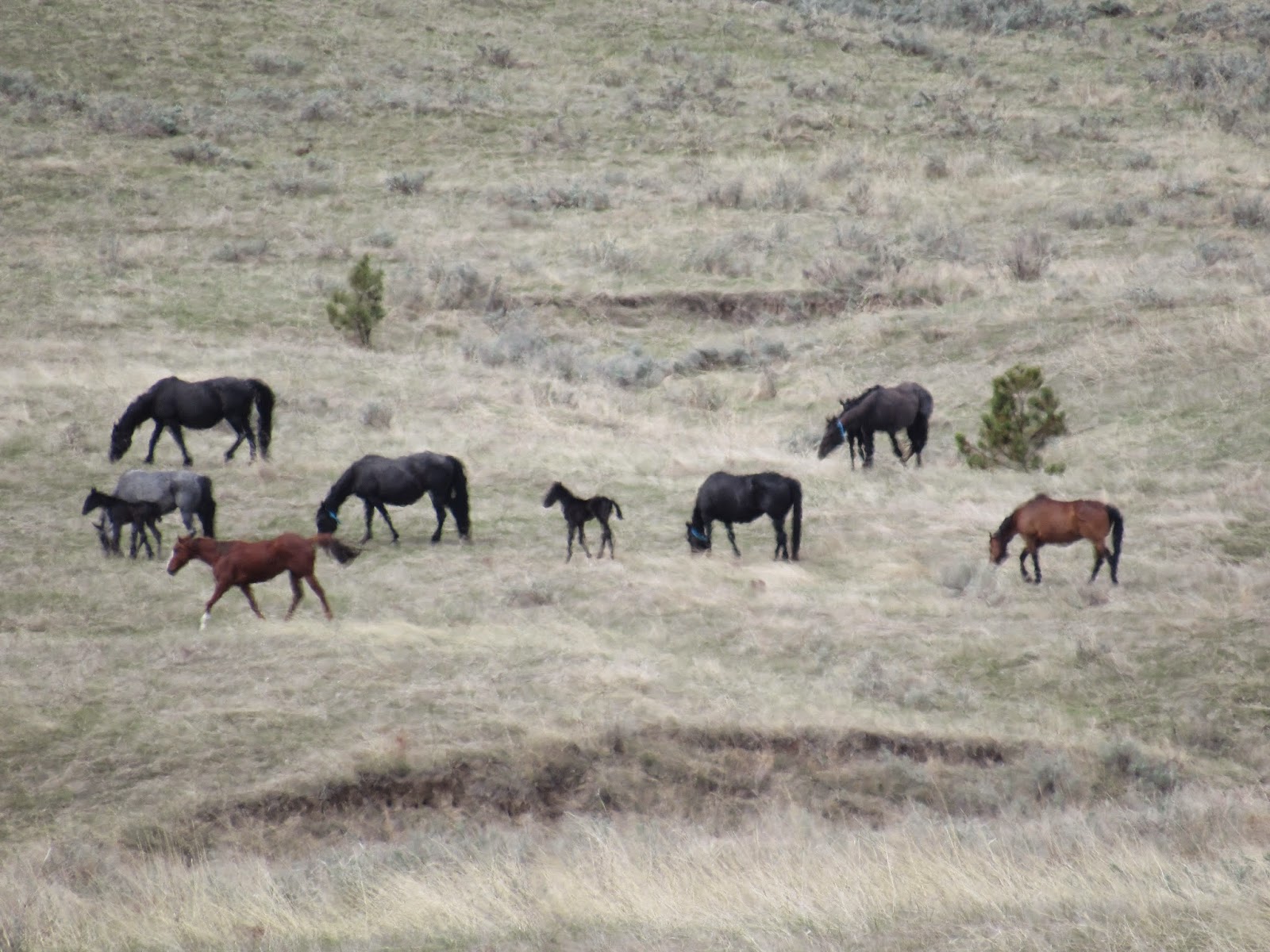
Wyoming horses - no not wild, but fun to watch this time of year.


Bill Barrow and his Sagebrush Philosophy


I have made several posts in the last few years about Edgar Wilson (Bill) Nye. Nye was one of the most famous newspaper columnists of the late 1800s. So famous he went on humorous lecture tours and shared billing with Mark Twain. His Laramie Boomerang writings appeared in papers throughout America and overseas. Seems unlikely that a state as small as Wyoming could have a newspaperman of such prominence, but they did, and they also had another.

Merris C. (Bill) Barrow was nearly as well-known as Bill Nye. He came to Wyoming in 1878 and after a few months was working for Bill Nye who was then the editor of the Boomerang. He worked in an entry-level job in the papers make-up department but in a few years he was running the Douglas Budget.

Barrow wrote two segments for the paper that were widely circulated and appreciated. Authoring both, Sagebrush Philosophy (once a month) and his weekly column, Bill Barrow’s Budget. Barrow’s folksy cowboy philosophy was a hit. He advertised his newspaper as, “five the chunk”, (five cents each) or, “two plunks per” ($2.00 a year), and reported it was printed on, “prickly pear papyrus.”
He reported his sagebrush philosophy, was “pungent yes, but palatable.” The paper did well, for a small town paper, but it was Bill Barrow and his words that were sent around the country.


I am not sure today if newspapers present the type of vehicle a writer needs to become known worldwide. A few columnist writing for papers with circulations in the hundreds of thousands are well known but not the superstar writers of the old days. Today we reserve that status for our favorite novel writers.
One of a group of horses and mules from Rocky Mountain National Park that winter each year at Fort Laramie.

The Spring Buffalo Hunt

For the Indians of the central plains extending to the Rocky Mountains spring was an important time. Two big buffalo hunts happened each year one in September when the bison were fat and the tribes were beginning their preparation for winter. The other was about now, when the weather warmed around the first of April.

Unlike the movies where Buffalo were always over the next hill, tribes often traveled for great distances for these hunts. Traveling 300 miles for a hunt was not unusual and sometimes many more miles were traveled.

The hunt was so important that scouts were sent far ahead and when the herd was spotted camps were set up 10 to 20 miles away so as not to frighten the herd. Great care was taken to make sure that no hunter got in a hurry and went out before the main hunt. Hunters who did were punished and sent packing.

Hunts were often on horseback but Indians also used nature sometimes driving herds into box canyons or over cliffs, anything that worked to provide for the tribe. The hunter who made the kill was given the tongue and hide the rest was shared with the tribe after the butchers took their share.
How much of the animal was taken or used depended on the hunt. When a large supply of buffalo were taken only the best cuts were used: tongue, hump, ribs and hide and often organ meat. If times were tough nearly everything was taken and used, including hoofs and some entrails.

Meat was eaten in great feasts when the hunters arrived back home in their tribal camps. Camp activities, for the next few weeks, centered on preserving meat for a time when it might be needed for travel or in poor hunting times.  Native peoples made the first jerky and pemmican.


Pemmican was tried as a traveling food for American troops in WWI but it never caught on, at least here. German solders used pemmican in both WWI and WWII, and reportedly found it quite good.

Oldest House in Wyoming

Did you know the oldest house in the world is in Wyoming? This may not be a completely accurate statement but it is true if you look at this house the way I do. How do I look at it? I look at the building material not the structure itself.
How old is it? This is why it is the oldest, it is 150,000,000 years old, maybe more. The house was built of dinosaur bones from one of many digs at nearby Como Bluff. 


The Bluff is near the small Wyoming village of Medicine Bow, the town made famous in Owen Wister’s, “The Virginian.”
Como Bluff Area
Como Bluff digs have yielded bones of hundreds of dinosaurs, included two of the most complete skeletons ever found. One of many remains found here was the famous thunder lizard, Brontosaurus, the 75 foot long amphibious Sauropod.
Brontosaurus-Rex

I have always found the idea of dinosaurs roaming Wyoming and other parts of the earth fascinating, but I know very little about them. I am learning more from my grand-kids every time they visit and we watch, Walking With Dinosaurs.


Seems kids like to study the giant animals. I do not think we spent much time, maybe no time at all studying dinosaurs when I was in elementary school, maybe I was daydreaming of recess at the time. It was a long, long time ago when I was in elementary school, perhaps dinosaurs were still walking around at the time and not that interesting to study.

The 1835 Rendezvous - Times are Changing

Twelve of the famous Mountain Man Rendezvous were held in what today is Wyoming’s south pass country. The 1835 Rendezvous may very well be the one that opened up the west for settlers. A doctor, Dr. Marcus Whitman and a minister, Reverend Samuel Parker were present, representing occupations not before seen in the mountains. Whitman handed out various medicines, did some surgeries and generally helped trappers and Indians alike. Parker made friends with the tribes and preached from his, white man’s book of God.


Five years later the fur trade was ending, and less than a decade after that 49ers were racing across Wyoming on their way to the gold fields of California

It Was Once Summer

Seems like June and July were not so long ago. But it was more than half a year. Guess that means we are getting closer to summer. After this latest snow and cold snap, I am ready. These photos are a look back to a few hours we spent on a fantastic evening June 28, 2014 in Guernsey State Park.

June Wildflowers

Snapped as we headed home

Evening Light Plays With Color Below Echo Cave

Setting Sun Turns the Lake Golden

How Long Ago, Who ?