Showing posts with label Bannock. Show all posts

Battle Mountain Wyoming

The Tale of Two Mountains Named Battle

Wyoming boasts, not one but two Battle Mountains. One of the  Battle Mountain’s and the more famous of the two is in the Medicine Bow Range on Wyoming’s southern border and sits near the tiny hamlet of Savery, peaking at a bit over 9,100 feet, about 3,000 feet more than the surrounding area. The second is in Sublette County south and east of Jackson and is described more often as a hill than a mountain with an elevation of 7,100 feet.


As readers might guess, each was named after a famous battle. Or in the case of the Sublette Mountain a bit of a disturbance. In reality, the battle was but a misunderstanding of hunting rights in the area. In 1895 a posse from Jackson was sent to arrest a small party of Bannocks for game law violations. Seems the area had been a long time hunting ground for the tribe, but now with Wyoming being a state for five years there were rules about hunting. Never mind that the Bannock tribe had hunted the area for generations.

The Battle Mountain in southern Carbon County boasts a much better reason for its name.  It was the setting for an 1841 battle between 35 members of the American Fur Company and what has been described as a large group of Cheyenne and Sioux. Several trappers, including Henry Fraeb (also spelled as Frapp), the group’s leader, were killed. Beloved Wyoming mountain man, Jim Baker at age 21,  became the new leader of the trapper bunch when Fraeb was killed, and barely escaped with his life. The furious battle led to the changing of Bastion Mountain’s name, to Battle Mountain.
Battle Mountain and Battle Lake - Site of the 1841 battle
                   
Note – There is also a nice Wyoming legend of Thomas Edison camping at the foot of Battle Mountain and fishing in Battle Lake when he was struck with the inspiration to create an electric light. Great story if it’s true!

Yellowstone and The First Visitors

With all the crazy goings on in Yellowstone this summer, it would be nice to see some more positive news of, and from the park. News about record visitor numbers and the hundreds of thousands that use the park and follow the rules. For those who have never visited it should be a bucket list trip, a place everyone needs to go in there lifetime. In this age of man-made tourist attractions it is wonderful to visit Yellowstone, and nature at its best.


The First Visitors

Historically five Indian tribes lived in and around the park. Crow, Blackfeet, Bannock, Shoshoni and the ancient Sheep Eaters were natives of the area. Of these tribes, only the Sheep Eaters are known to have resided, full time inside of what today are the boundaries of Yellowstone National Park. These ancient hunting and gathering people lived in brush lodges in parts of the park far from the hot springs and geysers. They left behind only a few stone tools and remnants of lodges but are instrumental in park history. The other four tribes were in and out of the park but never resided there full time. Like the Sheep Eaters, these tribes stayed away from the geothermal areas of the park.

Blackfoot Chief Painted Wing chased a group of Shoshoni into what would become the park in 1845. The Shoshoni had stolen Blackfoot horses, but when the pursuit reached the area of the hot springs, the Blackfeet turned around, not willing to go into that area of the park.


Jim Bridger and the Mountain Men

When the first trappers came to the area in the 1820s, they too entered the park. Legendary Mountain Man Jim Bridger, who first visited in 1825, entered the park and was so fascinated he came back many times, over the years, and explored much of the area. His tall tales of things he saw and did became part of American Folklore.  His stories of petrified trees, birds, music and air and of glass mountains and catching and cooking fish in the same stream, were told in western school rooms and around campfires and potbellied stoves for more than a century.


What a great way to vacation in Americas National Parks and Monuments and all 50 states magnificent state parks.

How I Will Spend My Summer


We have another trip planned to Yellowstone, but will likely wait for fall, with cooler weather and less traffic.  In the meantime, we will spend some time in the Black Hills and several Wyoming State Parks, oh, and a trip to Estes Park.  
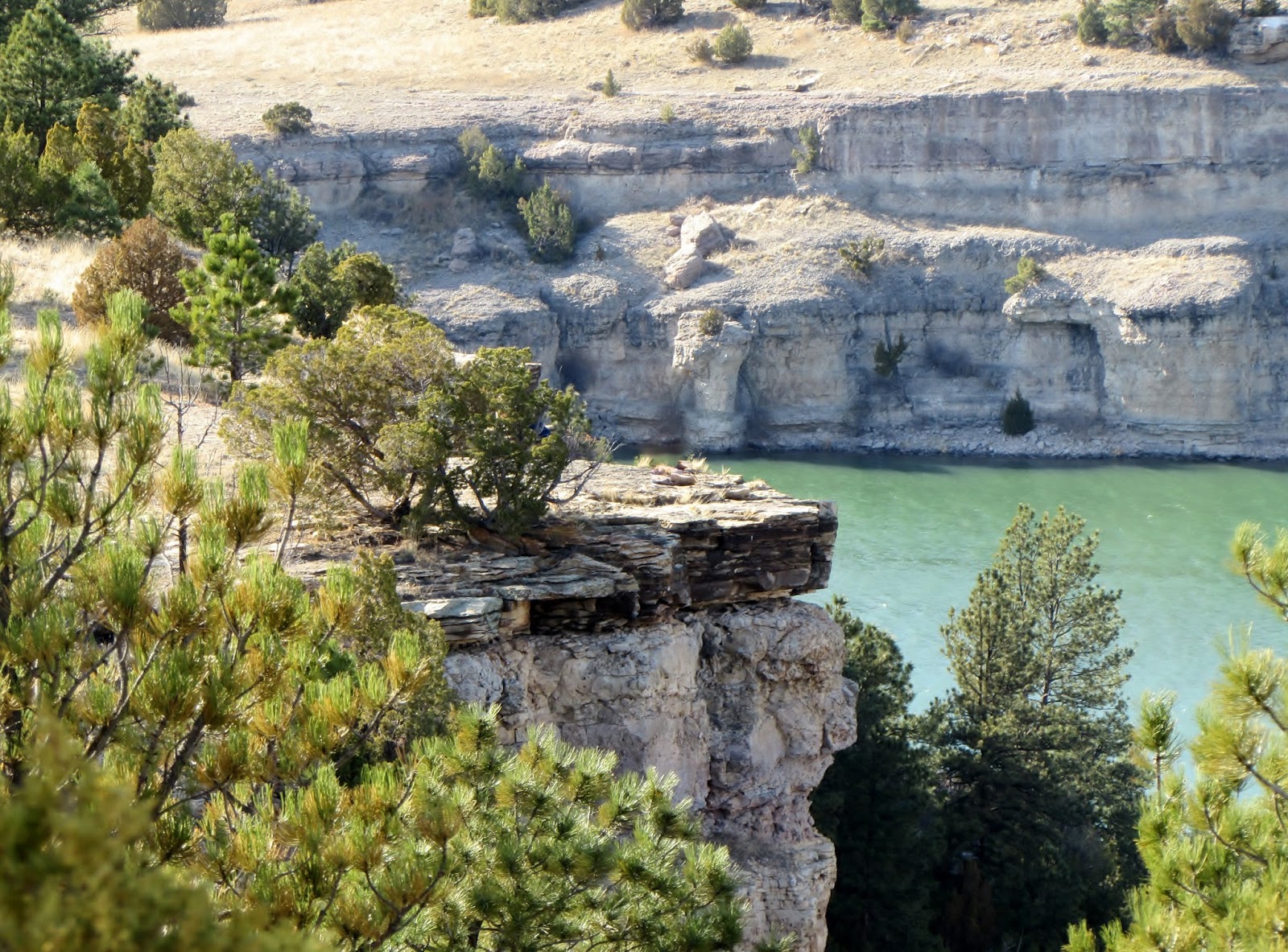
One of My Favorite Places - Guernsey State Park

Coyote


Among the Shoshone and Bannock tribes of early day Wyoming the coyote was a revered animal.

Many early plains and mountain Indian cultures told stories with the coyote at the center. The coyote had great powers, often that no other animal had. In any given story he might be a hero, in others a fool or trickster, but the coyote is always, deep down, wise and all knowing.

Among the Bannocks and Shoshone a tribal member would never purposely injure or kill a coyote. The coyote was blessed by the spirits and if anyone harmed or bothered it they could be overcome by evil spirits.

The night howl of the coyote was spiritual to many tribes who believed the howl was a mournful cry for all lost souls, not a simple warning of bad weather a belief held by modern non-Indian cultures.

I hope all of you have heard or will hear the mournful cry of the coyote. Every time I hear a coyote howl or the hoot of an owl I thank God for nature. It is truly all around us.