Showing posts with label Trappers. Show all posts

Laramie - as in old Jacques LaRamie

 Dec 20, 2021

Laramie 


La Ramie, as in the man who has more things named after him than any other person in Wyoming. His name (maybe) was Jacques LaRamie. In Wyoming, we have the Laramie Range, Laramie Peak, Fort Laramie, the city of Laramie, the Laramie River, many Laramie streets, and probably other things I cannot think of right now. Why the (maybe) when I mentioned his first name was Jacques?

Some historians tell us that Jacques was a popular French-Canadian name, and someone writing history tagged him with it. Some believe his name was Baptiste. Others are convinced his first name was Joseph. Doesn’t sound nearly as good as Jacques. Joe Laramie – not much of a ring to it. 

J. Edmond Laramee, who claimes to be a descendant of Jacque, relates that his parents were Joseph and Jeanne Laramee of Quebec. It sounds plausible, except that Joseph and Jeanne had no children with the first name of Jacque. The couple had five sons, one of which was Joseph, but no Jacque. 


We didn’t know his surname either, not for sure, as there were also multiple spellings of his last name. At some time along the way, we modern agers settled on Laramie because it was easier to say and spell. We also do not know how he died. As most early histories were written (some fact and some fiction), he died a heroic death, either killed by Indians (the Arapaho vehemently denied this), or he fell on the ice, broke his leg, and fought on for days or weeks before passing. 

Was he a great spokesman for and leader of the free trappers, or was he simply a man who was friendly with all who, after his death, other trappers liked to tell stories about? We will never know, but it doesn’t matter. He still represented that early time in Wyoming history the way we want it to be – whether true or not. 


In my many years teaching Wyoming history, I sometimes referred to Laramie as Pierre or Joe as a reminder of how fickle history can be. 


Hope all of you have a most Merry Christmas!


Hot Weather - The Rendezvous & Sitting in the Shade

What About this Heat?
It has ben hot the last couple of weeks. So hot that grass is turning brown fast, tough for ranchers and for city people who like a beautiful green lawn. Wyoming’s all-time record high was 115 degrees set in Basin in August of 1983. We have been over 100 but thankfully quite a few degrees from 115. Reminds me of the old Wyoming joke about the heat – “I watched a Coyote chasing a Jack Rabbit and it was so hot they were both walking.”


Rendezvous
During these hot days of July, nothing beat sitting around in the shade, swapping stories, and in the case of many trappers, drinking, and overeating. Rendezvous took place this time of the year, July, a time when trappers really had nothing to do. Must have been quite a site, these Rendezvous, with boisterous talking, games, races, music, and dancing.  Trappers from big companies were joined by free trappers and Native Indians and salesmen with trade goods. The trade goods often include not only trapping supplies, but women for hire, and large quantities of bad whiskey. A few trappers brought in their wives and sometimes children. Some of the later rendezvous included tourists, newsmen, and artists, leaving behind a rich history. A history that is often fiction, as much as fact, interesting and colorful times they were indeed.


Meanwhile
Enjoy the heat and remember it brings on, great gardens, baseball, barbecues and many other great summer activities.


Now I think I will go outside sit in the shade and read a good book.

Speaking of good books if you would like a bit of Wyoming fiction, you can see all my books here. Thanks for looking, all available in softcover or eBook.


Coming Soon - A Visit to Fort Laramie - Again

Seems like my blogging has slowed significantly since the weather started to cooperate with my summer activities.
Summer means getting more time out with my camera
      Speaking of summer activities, I see that next Saturday, June 17, is one of my favorite summer events, Fur Trade Day at Fort Laramie. Over the years I have spent much time in the study of the Mountain Man era and loved teaching that part of the growing west in my history classes. Fur Trade Day is one event that really fits my interest. Over the past few years, we have made them all and found the reenactors to be knowledgeable, friendly and willing to answer any and all questions. In case any readers are thinking about going it takes place from 9:30 – 5:00 on that day. (Saturday, June 17)
My wife trying out a trapper recliner
I am the not so Mountain Man-ish one at Fur Trae Day last year

    Must be my preparation because I am presently re-reading, Donald Clayton Porter’s classic novel, Fort Laramie. I read this one so many years ago that it reads like a new story to me.
The Ruts south of Guernsey Wyoming
    We enjoy living only 13 miles from the Fort and less than a mile from the most famous ruts of the Oregon Trail. Life is good when it is summer in Wyoming.

For Your Enjoument - Fort Laramie Trivia 
 Answers under the last photo
1.    What two rivers come together near Fort Laramie?
2.    Which well known and now well-preserved building at the fort served as Officer Quarters and as the Post Headquarters?
3.    Where did Fort Laramie get its unique to Wyoming name?

On the grounds of Fort Laramie - July 4, 2016


Answers
1.    North Platte and Laramie
2.    Old Bedlam – May now be the oldest building in Wyoming
3.    Jacques La Ramie sometimes spelled Ramee - I prefer Ramie


Wyoming-the West-and Daniel Webster

As early Wyoming started to grow,  slowly, a few visionaries saw all of the west as a part of the United States one day. Trappers were working the area by 1820, and traders were not far behind. We were only a few years away from the mass movement west on the Oregon and Morman Trails. But not everyone in power was for westward expansion. The Whigs, led by two of the most powerful men in the United States political history, Henry Clay, and Daniel Webster like Abraham Lincoln a few years later, wanted to deepen the economy, not expand it with the addition of new states. Daniel Webster famously said on the floor of the Senate.

What do we want with this vast, worthless area? This region of savages and wild beasts, of deserts of shifting sands and whirlwinds of dust, of cactus and prairie dogs? To what use could we ever hope to put these great deserts, or those endless mountain ranges, impenetrable and covered to their very base with eternal snow? What can we ever hope to do with the western coast, a coast of three thousand miles, rock-bound, cheerless, uninviting, and not a harbor on it? What use have we for this country?  
I Like It In The West - Lots of Places To Go and Things to See

Years later the quote found in many high school history books changed somewhat, tacking onto the end -

Mr. President, I will never vote one cent from the public treasury to place the Pacific coast one inch nearer to Boston than it is now.
Maybe Those Opposed to Westward Expansion Should Have Taken a Look at a Wyoming,
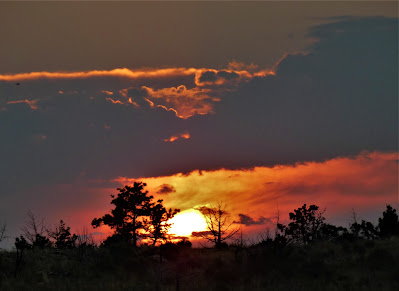
 North Platte River Valley, Sunset


From reading the Webster sentiment, it is hard to believe that Wyoming and all of the west, ever became part of America.

Oh, I forgot to mention, he never said it. The quote, one of the most famous in opposition to westward expansion, was made up. By who? No one knows, but I would suspect whoever it was, likely did not see a need for more states, especially out here in the west. 
Not A Bad Place to Live - Here in the Great American Desert

Mountain Man - Mystery Man

Although the trapper period of Wyoming history lasted only about 20 years, (1820-1840) there was some activity by mountain man/trappers before that time. Those that made it are remembered as the colorful characters they were. One of the most famous, or in some circles, infamous men was Edward Rose. Rose was the son of a white trader and an African American/Cherokee mother. He was more than likely the first resident of Wyoming’s Big Horn Basin. Rose was in the Basin as early as 1807 or 08, a decade and more before the trapper period in the west.


Rose was described by Washington Irving as, “A dogged, sullen, silent fellow of sinister aspect more of a savage than a civilized man in his appearance.” Rose, who may have been a river pirate on the Mississippi before becoming a legend in the West, purportedly left the east after being released or escaping chains put on him by the law.

Washington Irving


Rose was adopted into the Crow tribe and was at times called by one of two Crow names, Five Scalps after killing five Blackfeet in and battle, and Nez Coupe, meaning Cut Nose. The Nez Coupe moniker referred to the scar and a small missing part on the side of the tip of his nose. Westerners who know Rose never saw him without the prominent scar leaving this historian to surmise that it was a result of a mix-up on the river. 
Mississippi River near Vicksburg Mississippi - I took this shot last October

Mississippi River near Vicksburg Mississippi - I took this shot last October


The exact year of Rose’s death is unknown, but some believe he died with legendary Mountain man Hugh Glass on the Bighorn River in a fight with the Arikara in 1833. Rose would have been about 53 at the time, quite a few years for the life he led. 

Me and a Mountain Man -not saying which is which

Fort Laramie and the Plains Indian Culture


Until 1834 Americas vast buffalo plains were wild and untouched by eastern society and business. All that changed when William Sublette built the small, Fort William, on the Laramie and Platte Rivers of today’s Wyoming. Society and eastern business came west and stationed itself behind the 18 foot high stacked earth and cottonwood walls of the fort the trappers already called Laramie.
Much of the fur trade in America’s northwest and south were already controlled by far removed big business and now the great free trappers and traders of the plains and Rocky Mountains had eastern business in their midst.
White men had hunted and trapped this area for two decades, living, dressing, eating and hunting like their nomad brothers of the plains. Many married into the tribes, happy with the roaming freedom of the plains Indians.
Over the Laramie River from the Fort
With the building of Fort Laramie came a separation of cultures. The walls of the fort kept the Indians out and let the white men in. When allowed inside, Indians were treated more like intruders than guests, a most opposite approach from the tribes who had welcomed whites into their world a few years earlier.
Trapper and Trader at Fort Laramie

In the year 1834 and the west was going through a huge change, a change that would bring bloodshed to the plains for more than a half century. The east had come west.