Showing posts with label Yellowstone Park. Show all posts

Yellowstone and The First Visitors

With all the crazy goings on in Yellowstone this summer, it would be nice to see some more positive news of, and from the park. News about record visitor numbers and the hundreds of thousands that use the park and follow the rules. For those who have never visited it should be a bucket list trip, a place everyone needs to go in there lifetime. In this age of man-made tourist attractions it is wonderful to visit Yellowstone, and nature at its best.


The First Visitors

Historically five Indian tribes lived in and around the park. Crow, Blackfeet, Bannock, Shoshoni and the ancient Sheep Eaters were natives of the area. Of these tribes, only the Sheep Eaters are known to have resided, full time inside of what today are the boundaries of Yellowstone National Park. These ancient hunting and gathering people lived in brush lodges in parts of the park far from the hot springs and geysers. They left behind only a few stone tools and remnants of lodges but are instrumental in park history. The other four tribes were in and out of the park but never resided there full time. Like the Sheep Eaters, these tribes stayed away from the geothermal areas of the park.

Blackfoot Chief Painted Wing chased a group of Shoshoni into what would become the park in 1845. The Shoshoni had stolen Blackfoot horses, but when the pursuit reached the area of the hot springs, the Blackfeet turned around, not willing to go into that area of the park.


Jim Bridger and the Mountain Men

When the first trappers came to the area in the 1820s, they too entered the park. Legendary Mountain Man Jim Bridger, who first visited in 1825, entered the park and was so fascinated he came back many times, over the years, and explored much of the area. His tall tales of things he saw and did became part of American Folklore.  His stories of petrified trees, birds, music and air and of glass mountains and catching and cooking fish in the same stream, were told in western school rooms and around campfires and potbellied stoves for more than a century.


What a great way to vacation in Americas National Parks and Monuments and all 50 states magnificent state parks.

How I Will Spend My Summer


We have another trip planned to Yellowstone, but will likely wait for fall, with cooler weather and less traffic.  In the meantime, we will spend some time in the Black Hills and several Wyoming State Parks, oh, and a trip to Estes Park.  
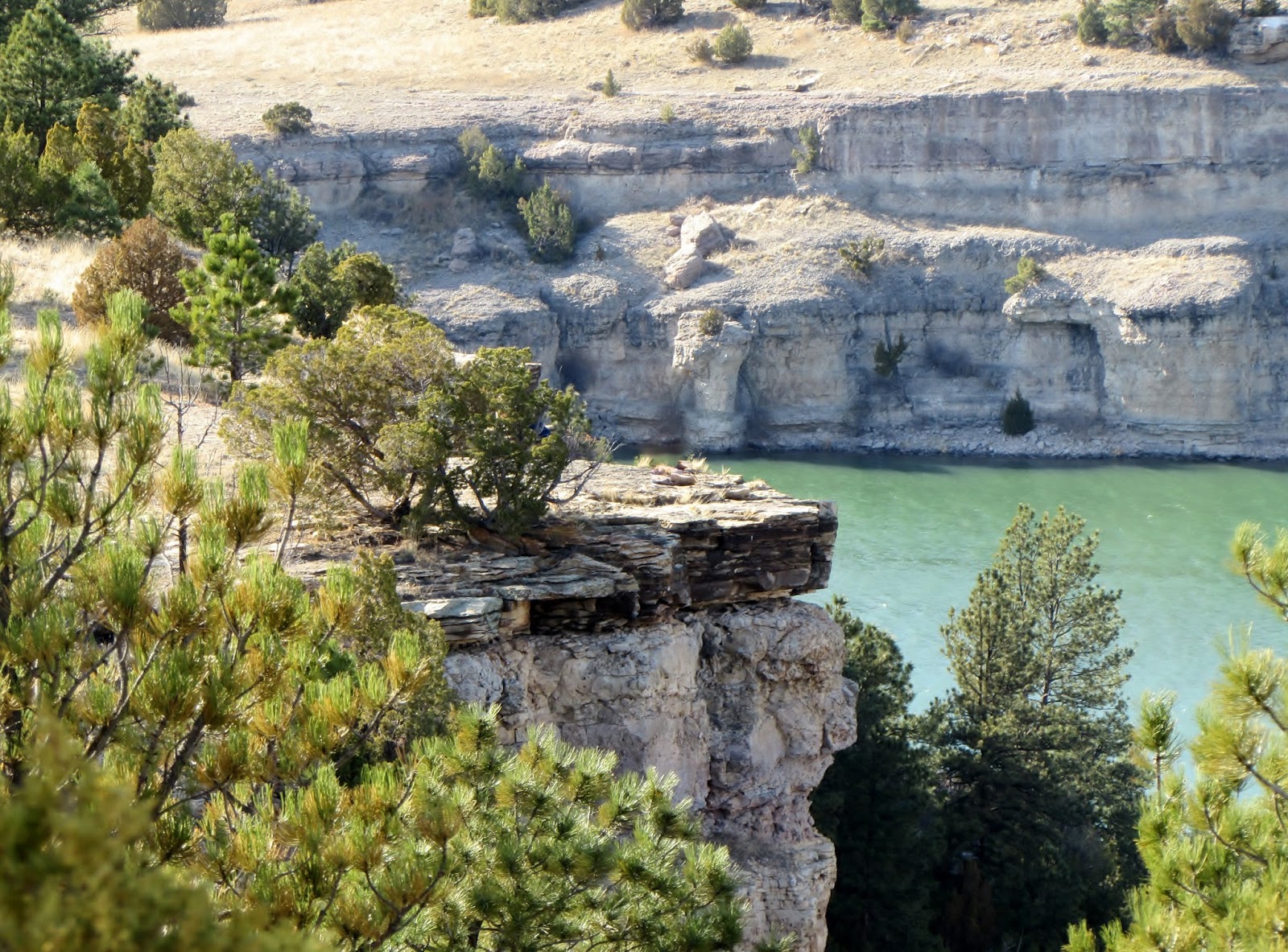
One of My Favorite Places - Guernsey State Park

What, Automobiles in Yellowstone!


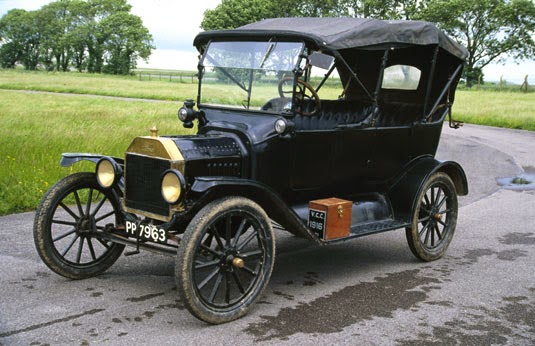
Onward – to Yellowstone – In an automobile

The Official Route Book of the Yellowstone Highway Association in Wyoming and Colorado, published in 1916, first invited people to visit the park in their autos.

The association, started in Douglas, Wyoming (1915), with a stated purpose of promoting good roads everywhere, but had a special emphasis on roads leading to and from Yellowstone Park in Wyoming’s Northwest corner.

Care was taken in promoting a route through towns and cities with the best accommodations and also homes one of the commissioners/members, of the Yellowstone Highway Association. It took a bit of time to convince the United States Government that automobiles would be safe in the park, but at long last they reluctantly went along with the idea. They finally allowed with a note that, it looks like maybe automobiles are here to stay.

All cars were to be inspected to make sure they had enough gas to make the trip through the park and that the tires were in very good shape, along with the general condition of the car. No motorcycles or busses, with paying customers, were allowed. Each driver was given a copy of driving regulations when entering the park, these included the time it should take to reach various destinations around the park.
1916 Ford
 
-The following rules were to be followed when driving through the park-

Speed- Limited to 12 miles per hour going uphill and 10 miles per hour going downhill-8 miles per hour on curves

Teams- “When teams, saddle horse, or pack trains approach, automobiles will take the outer edge of the roadway, regardless of the direction in which they may be going.”

Charges- $7.50 for a drive through the park or $10.00 for the year, October 1 to the last day of September

Fines- Times where checked and recorded and fines were given for arriving at the desired destination too fast, how much? Fines were .50 cents for each minute early for the first five minutes then went to a dollar a minute if the driver arrived more than five minutes early. Faster than that, could be fined $25.00 dollars and ejected from the park.

I visited the park last September and am ready to go back.

Not sure who was most excited when we saw this Grizzly, Me or my grandson
Must have been quite an adventure, driving through the park, come to think of it, it is still quite and adventure.


Wyoming Forts


Wyoming has some of the best known forts in the west. Fort Laramie and Fort Bridger were busy Oregon Trail stops and both still support active tourist’s trade. Today most westward expansion forts are but footnotes in history books, or even less. I found four Wyoming Forts that have great names, but seem lost to all but a very few locals, too bad they didn’t last.

Fort Nonsense - Built in 1832 by Captain Bonneville, six miles west of present day town of Daniel. It was the first fort built in Wyoming specifically for the fur trade. Before it was finished Bonneville realized it was a bad location, too high and too hard to reach. Bonneville and his company abandoned the fort soon after it was completed. The fort was actually named Fort Bonneville, but it was usually referred to as Fort Nonsense or even Bonneville’s Folly. The fort was a stockade, described as 100-foot square and built of 12-inch cottonwood logs, 15 feet high with blockhouses on opposite diagonal corners. The location was close to several of the famous mountain man rendezvous held in the 1820s and 1830s. But they were held in the summer and Wyoming has great mountain summer weather.

Fort Stand Off - Obscure even to citizens of Wyoming and not found in many history books. That is unless a Teton County history book is checked then one might find something about Fort Stand Off. Some believe it to be more legend than fact. It wasn’t really a fort, nothing like a fort in the military sense. Fort Sand Off was an area surrounded by rocks where outlaws held off U.S. Marshalls. Outlaw Cal Thompson was the most famous of those who used this hideout. Maybe it could have been as famous as Hole-In-The Wall if Butch Cassidy would have used it, instead of Cal Thomas, an outlaw lost in history.

Fort Yellowstone – The Military ran Yellowstone Park from 1886-1918. It was the first National Park and congress had not yet set up a way to manage national parks. The headquarters were at Mammoth Hot springs and were called Fort Sheridan, after the Civil War general, but it was soon changed to the more appropriate Fort Yellowstone.

Fort Davy Crockett – Located in Sweetwater County and named by a man who had a friend killed at the Alamo. Like many obscure forts, in the mountain west, it was a fur trading station. And also like other of these forts, it was short lived, opening in 1836 but reportedly abandoned and falling apart by 1844. Must not have been much of a carpenter who built this one.
Trail Ruts a half mile south of our house and 13 miles out of Fort Laramie
 

Big Lie becomes a National Park


From the time of John Colter, who left the Lewis and Clark expedition when they reached the Pacific, to wander back to what would become Yellowstone Park, to Jim Bridger and later the Washburn- Langford expedition of 1870, everyone who told stories of the Yellowstone area was branded a liar.

The wonders of the park were just too much for people to believe, so they didn’t. Finally in 1872, only a little more than a year after Langford was branded the last of the champion Yellowstone liars of the west, President Grant approved dedication of Yellowstone as a national park. And guess what? Langford was named the first park Superintendent, guess Grant believed his tales of the Yellowstone country.

Today only in Iceland and New Zealand can one see geysers on the tremendous scale of Yellowstone. But you won’t see bears, bison, elk and moose anywhere else in the world like you can in Yellowstone.

It is a must see, if you have not yet been there put it on your list.  And on your way stop here in Guernsey, Wyoming to see the Oregon Trail Ruts, Register Cliff and the magnificent Guernsey State Park.

Great Day to Hold up a Stage Coach


Ed Trafton was a pretty good stage robber he may have held up more coaches than any other western outlaw. And he did it all the same day.

On a hot July day in 1914 Tafton and his hidden, and not at all active, partner Charles Erpenbach robbed 15 stages in one day. All 15 were stopped near Shoshone Point on the way to Old Faithful in Yellowstone Park. Seemed like as soon as he robbed one and sent it on its way another one was coming around the corner.

Tafton’s one day take was nearly a thousand in cash and over $100 in Jewelry. Oh—and five years in Leavenworth.

Note-The first autos came into the park the next year and by the next, 1916, stages coaches were gone from the park.

Wyoming Statehood


On this day (July 10) in 1890 Wyoming became a state # 44.

 Ten Wyoming facts

1.   Wyoming has the lowest population of all 50 United States.

2. Wyoming Cowboy’s—War Memorial Stadium at over 7,000 feet is the highest Division One Football Stadium in America (Go Pokes)

3. Wyoming was the first state to give women the right to vote.

4. Yellowstone is the first official National Park (1872)

5. Devils Tower was designated as the first National Monument (1906)

6. The majority of Yellowstone Park lies within the boundaries of Wyoming.

7.  Guernsey State Park in Platte County has some of the best examples of CCC (Civilian Conservation Corps) in the United States

8.  The continental divide splits and goes around the desert on all sides leaving the basin without normal drainage.

9. The Wind River actually changes its name in the middle of the stream becoming the Big Horn River at a site at the north end of the Wind River Canyon

10.         Deer have been in my garden at least 4 times this summer—that is why people still hunt in Wyoming. They seem to love tomatoes and strawberries best


The Last Stagecoach Holdup

The summer of 1914 may have truly marked the end of the old west. Why, because that was the year of the last stagecoach holdup, and it took place near Shoshone Point in Yellowstone Park. Other places claim the last holdup, including one of the Cheyenne-Deadwood Stage and one in Nevada, but I like this one. The year marked the end of the horse’s only transportation in the park, as cars came for the first time the next year, and a year after that, 1916 would mark the end of the coaches in the park.

I like this bit of history because the robber, Edward Trafton, (Ed Harrington) did not just hold up a stagecoach, he held up fifteen in a row. The stages carried tourists seeing the sights of the park, and the sixteenth coach, sniffing out something bad, turned around and went for help.

Wearing several layers of extra clothes and a black mask,Trafton stopped each coach rustled out the passengers and asked them, while holing a rifle, to put their money in a sack lying at his feet. For his days work he collected a little over nine hundred dollars and jewelry worth another one- hundred and thirty dollars. Trafton, a ladies’ man, or one who believed he was, laughed and asked the ladies to hide their jewelry, he was only interested in cash. Not sure how or why he ended up with more than a hundred dollars worth anyway, maybe he didn’t like some of the women as much as others.

Trafton had so much fun holding up a stage every half hour that he even allowed some of the passengers to take his photo. Not sure Tafton was the smartest of outlaws, but he likely believed he was, because of this day, famous, and needed to secure his place in history. It did secure a place but maybe not what he had in mind.

The well photographed outlaws next stop was Leavenworth, where he rested up for five years. He died more than a decade later
with a letter in his pocket claiming he was the cowboy Owen Wister based the Virginian on. More likely, if Wister ever met him and put him in the famous novel, he was one of the bad guys or less than bright characters in the story. Trampas?