In 1834, it was Fort William named after post founder, trapper/trader William Sublette.By 1841, the post was owned by the American Fur Company and renamed Fort John. In 1849, with gold rushers heading west, it was purchased by the United States Army for $4,000. With so many folks heading west, the government was convinced it needed to start protecting the trails.
 |
| Barracks at Fort Laramie |
In 1849, the first three companies of cavalry arrived at the fort, including Company G, 6th Infantry, which would become the permanent garrison at Fort Laramie. Many of the forts early enlistees, spoke broken or no English. Even in those days it was tough to find workers for $13 a month. The good news was reenlistment would add another two bucks a month. Not only were many of the new recruits recent immigrants, most had never ridden a horse. Fort Laramie had a large number of foot soldiers, so this was not much of a problem.
 |
| Across Parade Ground to Officer Quarters |
Something I have always found of interest, the army had companies of men into the 1880s then they became troops. Same group, different name. I often run across these terms used incorrectly when I am reading in my favorite genre, historical fiction.
Here is the makeup of a troop/company.
1 Captain
1 First Lieutenant
1 Second Lieutenant
1 First Sergeant
5 Line Sergeants
4 Corporals
2 Trumpeters
2 Farriers (horseshoers and
Horse doctors – army trained or self-trained veterinarians)
78 Privates (more or less, at Fort Laramie normally a few less)
 |
| Jail Cells - solitary at the Fort |
In the new research I am doing for a future book on Fort Laramie, I have found several instances where the Fort Commander held a rank lower than Captain – must not have been a very popular place.
 |
| Remains of the old Fort Hospital on the hill |
Although they were never close to having a full regiment of men, it was discussed when the Indian wars escalated along the Oregon, Mormon and Bozeman trails. That would have been quite a change as a regiment was made up of ten troops, meaning the number of soldiers at Fort Laramie would have gone from a normal 300 or so to 1,000. Note – After the Civil War a regiment was increased to 12 troops, not sure why.
 |
| There was always plenty of action around the fort |
 |
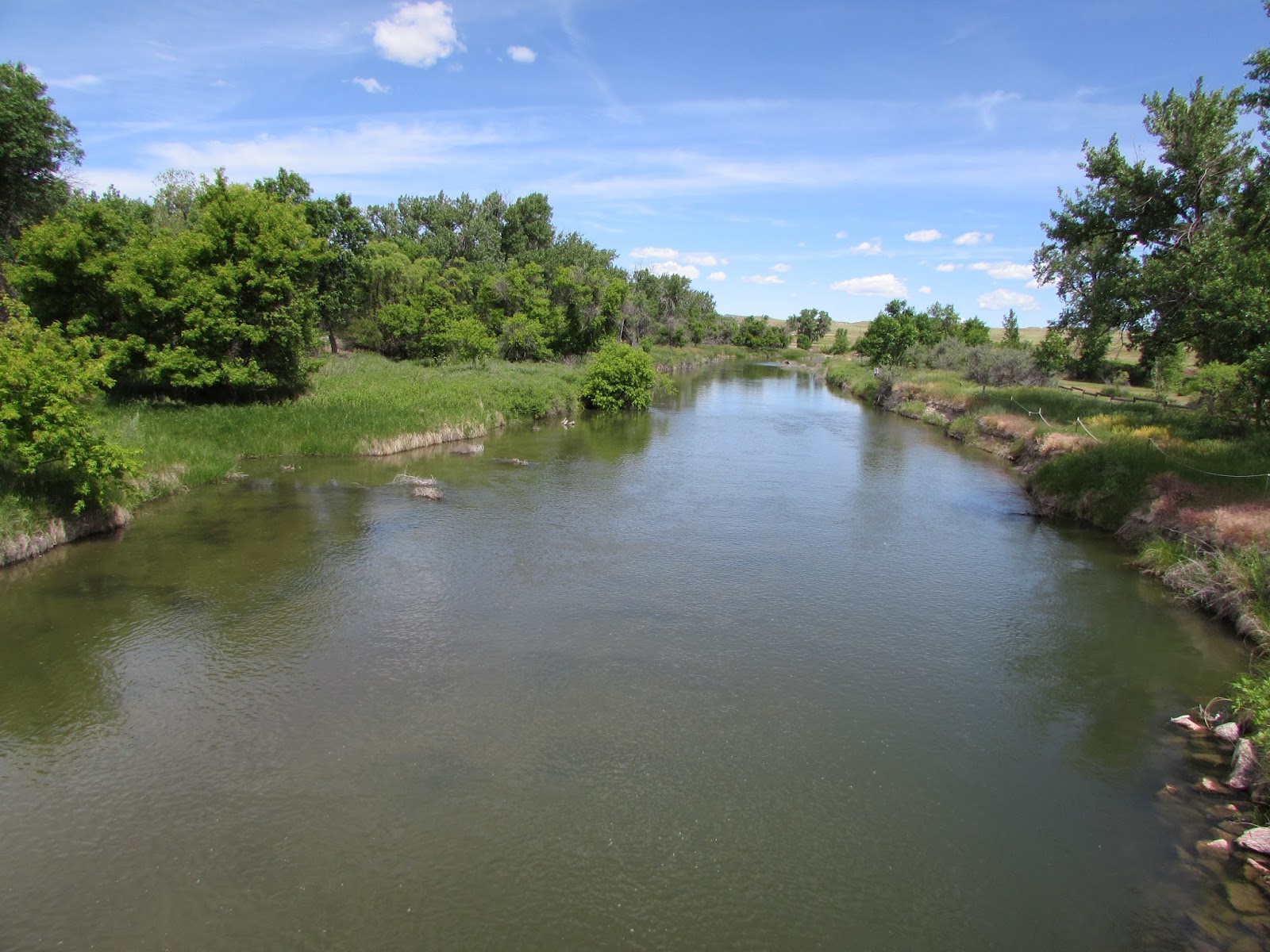
| Laramie River near the fort |