
We had a pretty nice little snowstorm last night and this morning, our deck and back yard have about four or five inches of the heavy wet white stuff.
 |
| It was still snowing here, about nine this morning |
Don’t Complain About the Weather
When I was a kid and complained about rain or snow, my dad would often say, “Farmers need the moisture.” He was right, any moisture this time of year is good and we were getting dry, even for a dry area like eastern Wyoming. He also reminded me that there was not much we could do about the weather even if we didn’t like it. Wet days like this help pastures, lawns and wildflowers.
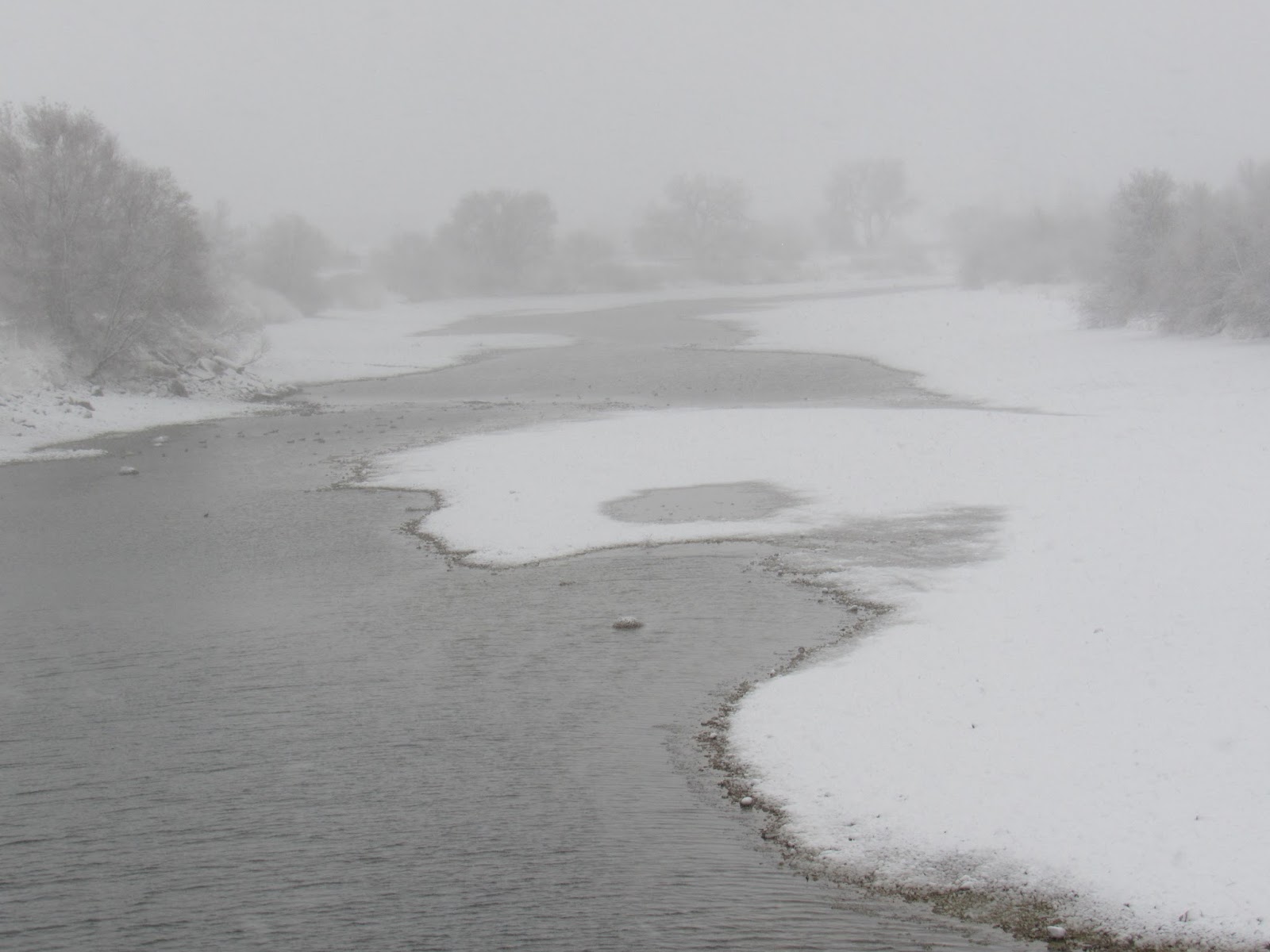 |
| North Platte River this morning - less than 1/4 mile from the Oregon Trail |
Wyoming Weather
Wyoming, depending on location gets 9-16 inches of measurable precipitation each year, so every little bit helps.
 |
| Rushes in the snow |
Trivia from Wyoming
It has been a few weeks since I posted any Wyoming trivia, and a cold, wet, windy March day like today is a perfect trivia day. Here goes five questions to mystify, baffle, surprise, and humor you.
 |
| Bonus Question Who was President of the United States when this building was constructed? We are standing at the front door |
-Good Luck, answers below next photo-
1. Why was the Organic Act (passed by Congress, July 25, 1868) important to Wyoming?
2. What Wyoming ranching custom is portrayed on the Buffalo in the center of the Wyoming state flag?
3. What is the Crow Indian word meaning, “tattooed?
4. What was the name of the trail that left the Oregon Trail for the Gold Fields of Montana?
5. Reverend William Vaux was the first of these in Wyoming? Hint not a preacher.

-Answers-
Bonus answer - F.D.R. (Museum built by the CCC at Guernsey State Park)
1. Created Wyoming Territory
2. Branding
3. Arapahoe
4. Bozeman Trail
5. First Wyoming teacher at first Wyoming school – 1852, Fort Laramie. -- I should note here that for most of the years of its existence, the school at the fort was taught by soldiers given that duty, or forced into that duty, most, if not all, hated it. In at least one case, a soldier was relieved of his teaching duties and put in the brig, for being drunk on the job.


